trainingreality helping people work better with people
decision paralysis
Please press (at least!) one of these.
It costs you nothing, and (possibly) helps us spread the word!
Frozen by indecision

Friday, 19 February 2010

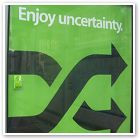
Have you even been completely, utterly, frozen and paralysed by indecision? Have you ever had one of those times when you simply can’t see a way out; you have no idea what to do; you don’t know where to go next? I have.

This is the final article in the series that started with a look at striking the balance between absolute certainty and simply going with the flow. For reference, the earlier articles in the series are here:

  • being flexible or determined
  • utter conviction in leadership

being a rock, or going with the flow

leadership of unswerving belief

  • positive mental attitude
  • doubt versus uncertainty

positive mental attitude

doubt or uncertainty


Personally, those times in life where I’ve been paralysed in my decision making, both in personal and business contexts, have been unpleasant to say the least. With the benefit of dispassionate reflection and 20/20 hindsight however, I’ve come up with a few different categories of indecisiveness which help to understand the causes more thoroughly, and therefore act on them more appropriately.

I don’t have enough information/knowledge/skills

If this is genuinely the reason, then the solution for your decision making is relatively straightforward. If you don’t have the information, you can probably find it, either by searching yourself more thoroughly, enrolling others, researching more broadly, and so on. Knowledge can be sought. Skills can be developed.

If it’s not just you, but the whole of human experience that doesn’t have the information, knowledge or skills, then you’re going to be taking a risk anyway, and, so long as you’ve used the information that is available to analyse the risk properly, you’re doing the best that can possibly be done!

A real watch-out here though is "paralysis by analysis" – using the need to analyse further to delay making a decision…which leads me to:

I don’t want to take responsibility

A rather more challenging and fundamental problem is that you might be delaying or avoiding a decision because the consequences of getting it "wrong" appear too great.

If we assume that this is "true", then a number of options appear: testing; risk analysis; sharing responsibility; and so on. Often, decisions can be broken down into smaller chucks and tackled bit by bit, so that, as results come in, the course that you’ve chosen can be adjusted and altered.

However, there are also times when this is "false". The use of potential negative consequences is a rationale that you give yourself for avoiding doing something. We can over-analyse, we can wait in the hope that the decision will be taken out of our hands, or we can expend huge amounts of effort trying to extricate ourselves from the situation in which a decision has to be made. If this is the case, we need to understand:

Why am I avoiding it?

If we are willing to go to great lengths to avoid decision-making, at some point we really ought to do ourselves the honour of simply asking why. An honest assessment of this could bring about a much deeper level of understanding about the situation, about our approach, and about our true feelings, and, by putting the decision into a different context, offer us different opportunities to make it.

--

There are many, many more reasons than this, and being honest with yourself about these reasons is the first step in overcoming indecisiveness. Please add your thoughts, experiences, other categories and challenging ideas below.


Please press (at least!) one of these.
It costs you nothing, and (possibly) helps us spread the word!

Please leave your thoughts and comments here

There are 3 comments
gravatar theheadsoffice – Bristol
September 02, 2010 - 16:23
Subject:

Sorry to disagree Simon but I think you do have a substantial slice of confidence in there! The fear of being wrong can be very dibilitating for some so they just won't risk it. Really interesting post! Thanks!

gravatar Cordelia Ditton (dillytalk) – Glasgow UK
August 31, 2010 - 17:26
Subject: Indecision

I think I agree with you..or.. maybe I don't...Sorry, couldn't resist. I think women in particular often feel they 'don't feel they have enough information/knowledge/skills'. I read a lovely piece once, can't remember where, where someone described offering work out and men would volunteer if they'd once considered the subject whereas women considered they needed a phd in the subject before they'd decide to offer their services. I'm no shrinking violet but I know I've fallen prey to this too!

Reply to Cordelia Ditton (dillytalk)
gravatar simon – North Yorkshire
September 02, 2010 - 16:09
Subject: Re: Indecision

Hi Cordelia, and thanks for your comment. It's sparked a few further thoughts off for me, which initially supported the 'gender divide' you mentioned, but then at least partly negated it! Let me give you a couple of personal examples...

1) I tend (hopefully with optimism rather than arrogance) to assume that I can do most things, if I give it a try, think it through and approach it logically. My work is largely academic/cerebral rather than practical/manual, and yet I rarely resist diving into practical things, despite no formal (or informal!) training. The first part of that sentence applies equally to a great friend of mine (male), who would never dream of tackling a practical job. I'll never forget popping in to his new house for a coffee and ending up fitting a radiator for him...

2) My training work usually involves some aspect of outdoor, experiential learning. Sometimes it's simple, but more often it involves some serious outward-bounds activity. I'm not qualified to run most of these, and therefore have people who work for me who are climbing/mountain biking/sailing etc qualified. However, I'll still have a go, and still help and coach others on those things as appropriate.

The three conclusions from this for me are:

a) I have a general mindset of "if X can do that activity, there is no reason why I can't - eventually". I may never be as good, as efficient, as person X, but that doesn't mean I'm incapable.

b) Not being able to do something yet is an exciting thing. I remember when our boiler broke down on Christmas Eve - there was no choice but to dismantle it myself, and I enjoyed working out (both practically and with internet research) how it worked and how I could fix it.

c) Being 'good' at something is a relative statement. I'm a pretty shocking climber compared to my qualified staff, but am usually better than my clients. This reminds me of the only joke I've ever heard described as 'an economist's joke:

An economist and a businessman were walking in the woods when they encountered a hungry bear. The economist turned to run. "That just goes to show how ridiculous you economists are with your assumptions," said the businessman. "You're assuming you can outrun the bear." "Wrong!" replied the economist. "I'm only assuming that I can outrun you."

--
Some may view my approach as simply confidence, but I don't see it that way - and I don't see myself as confident. I do however see myself as logical and systematic in my approach to things, and view problems as things to be sorted through the application of rational thought, be they intellectual or practical problems.

Thanks for making me think!

Leave a Comment


?
? ?
?

Powered by TalkBack